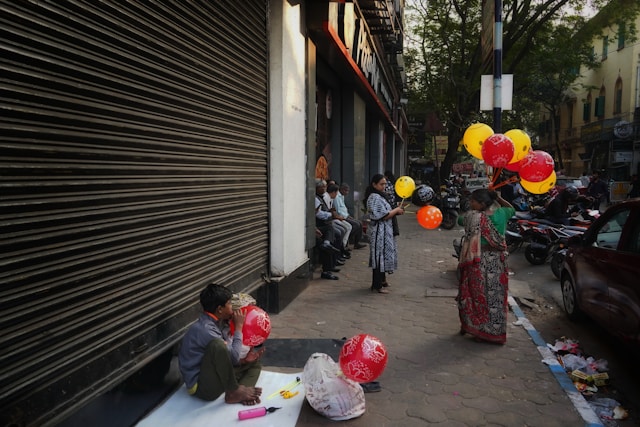

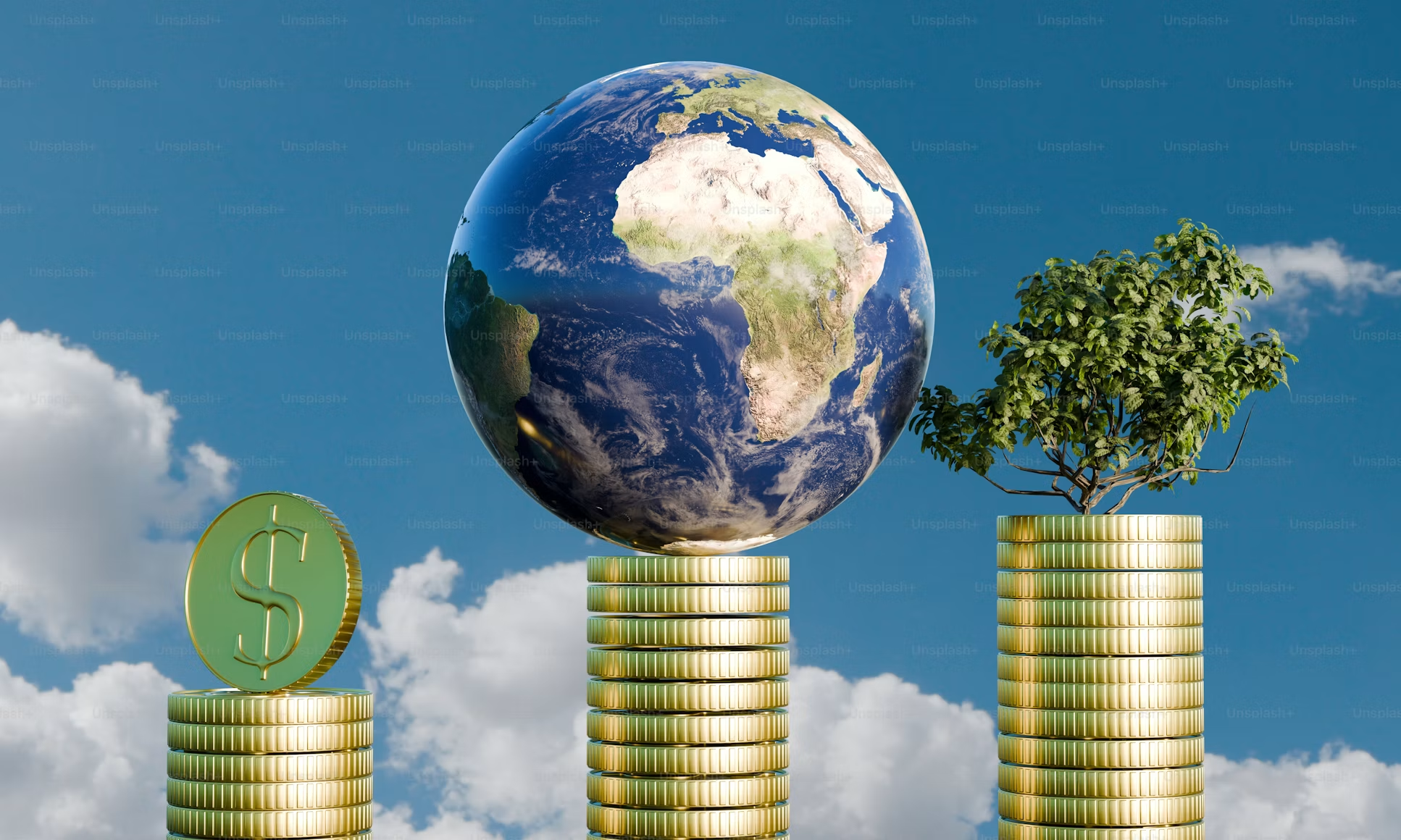
When we talk about the growth of a nation, what immediately comes to mind? Reducing poverty, generating employment, expanding education, raising incomes and increasing GDP. Bigger numbers seem to reassure us. More choices and greater variety, above and beyond what we actually need, still carry a powerful appeal. The tendency to associate development with ever-expanding choice and experience-based consumption is widespread, and perhaps most visible in developing and lower-income countries, where economic growth is understandably tied to aspirations for dignity, security, and a better life. The production machine runs continuously, delivering an almost infinite stream of goods and services while nations measure progress by their position on the GDP scoreboard. Yet the question increasingly confronting the world is not whether growth has delivered benefits. It clearly has. The question is whether this growth can remain the organising purpose of every economy, especially once basic needs have been met and ecological limits have been crossed.
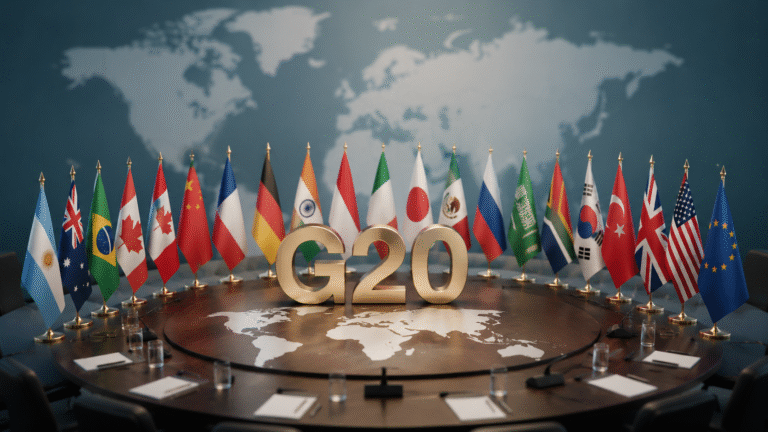
Post-growth literature advances the view that pursuing infinite growth on a finite planet can wreak havoc on humanity. At its centre is a shift away from GDP growth as the overriding goal and towards the wellbeing of people, society, and ecological systems. It seeks to decouple social wellbeing from economic growth, making the case that societies can prosper without continually expanding production and consumption. This inevitably resurfaces the Global North–South question in climate politics. It would be unjust to demand that lower-income countries curb development and consumption when basic needs are still not met equitably. Instead, post-growth scholars argue that wealthy economies, which have already achieved high levels of consumption and have crossed their fair share of ecological limits, must move away from endless expansion, reduce environmentally damaging excess, and create space for poorer countries to meet essential human needs. This calls for the concerned international community to establish rules collectively, beyond narrow national interests, as the question at stake is not about a single nationality but the planet and humans at large.
This discourse has found its empirical traces in the landmark report The Limits to Growth (1972). Using one of the first global computer simulation models (World3), the MIT team explored how exponential growth in population, industrialisation, pollution, food production, and resource depletion interacts with Earth’s finite physical limits. It explicitly mentions: “If the present growth trends in world population, industrialisation, pollution, food production, and resource depletion continue unchanged, the limits to growth on this planet will be reached sometime within the next one hundred years”. The most probable result will be a rather sudden and uncontrollable decline in both population and industrial capacity. The book’s core message was not a doomsday prophecy but a systems-based warning: unlimited material growth on a finite planet is impossible, and deliberate policy choices are needed to avoid overshoot and collapse.
Post-growth is an umbrella term that encapsulates several related frameworks rather than one rigid blueprint. Doughnut economics asks societies to meet everyone’s basic social needs without overshooting ecological ceilings. Wellbeing economics puts health, security, equality, relationships, and life satisfaction ahead of GDP. Steady-state economics seeks a stable, sustainable level of resource use. Degrowth goes further, calling for a planned and democratic reduction of environmentally damaging production and inequality, particularly in wealthy economies. Each of them aligns on the commonality: selectively shrink what is wasteful or harmful, expand what is socially valuable, and stop treating GDP as the scorecard for all forms of progress, well-being, and development.
Critics responded that scarcity would raise prices, prices would trigger innovation, and technology would find substitutes. Falling commodity prices seemed to have vindicated this optimism, albeit temporarily. Debates returned as resource prices rose after the early 2000s and as climate change became harder to ignore globally. Stockholm Resilience Centre, a specialised centre for ecology & environment under Stockholm University, claims that among the nine planetary boundaries (climate, biosphere, land use, ocean pH, freshwater, nutrients, ozone, aerosols, pollution), seven have already been breached.
While employment and social stability could be maintained through policy choices rather than through growth alone. The experiments remain limited, but they are not imaginary. Ecological macroeconomic models are beginning to test it. Canada’s LowGrow SFC model examined a “sustainable prosperity” path combining shorter working hours, green investment, net-zero emissions, and transfer payments. In this case, lower-growth pathways delivered stronger climate outcomes.
Basic-income-like cash transfers have shown positive social effects for economically vulnerable groups. Evidence also associates higher public-health spending with lower child and adult mortality. Participatory initiatives such as Doughnut Economics Action Labs have also allowed cities to develop programmes with residents and local stakeholders. Still, given the scale of the idea and its complexities at scalability, no country has yet enacted a full post-growth agenda, and small experiments do not imply global scalability as constraints differ.
The challenges are bigger than any one country or class of people; the questions at hand concern the planet and the whole of humanity. A low-growth economy could worsen unemployment, inequality, and debt unless institutions are redesigned from the foundation. A just transition demands a careful and intentional altering of debt relief, industrial policy, monetary sovereignty, fair trade arrangements, and an end to ecological unequal exchange. It does not simply entail a new version of austerity imposed from the North. Still, there is reason for hope. The policy aspect can provide actionable intervention measures: universal basic services, job guarantees, shorter working weeks, stronger unions, worker ownership, wealth taxes, carbon dividends, caps on fossil fuels, public investment, and measures of progress that go beyond GDP. We should build an economy where a decent life inevitably includes social, ecological, and emotional wellbeing and not just ever-rising material consumption driven by growth.
Disclaimer
The views and opinions expressed in this write-up are solely those of the author and do not necessarily reflect the official position of Renaissance International Review, its management, editors, or platform.
While the facts and figures presented have been cross-checked by the editorial team to the best of their ability, readers are encouraged to independently verify information where necessary.
For any concerns, clarifications, or objections regarding the content, please contact: contact@rir.world